
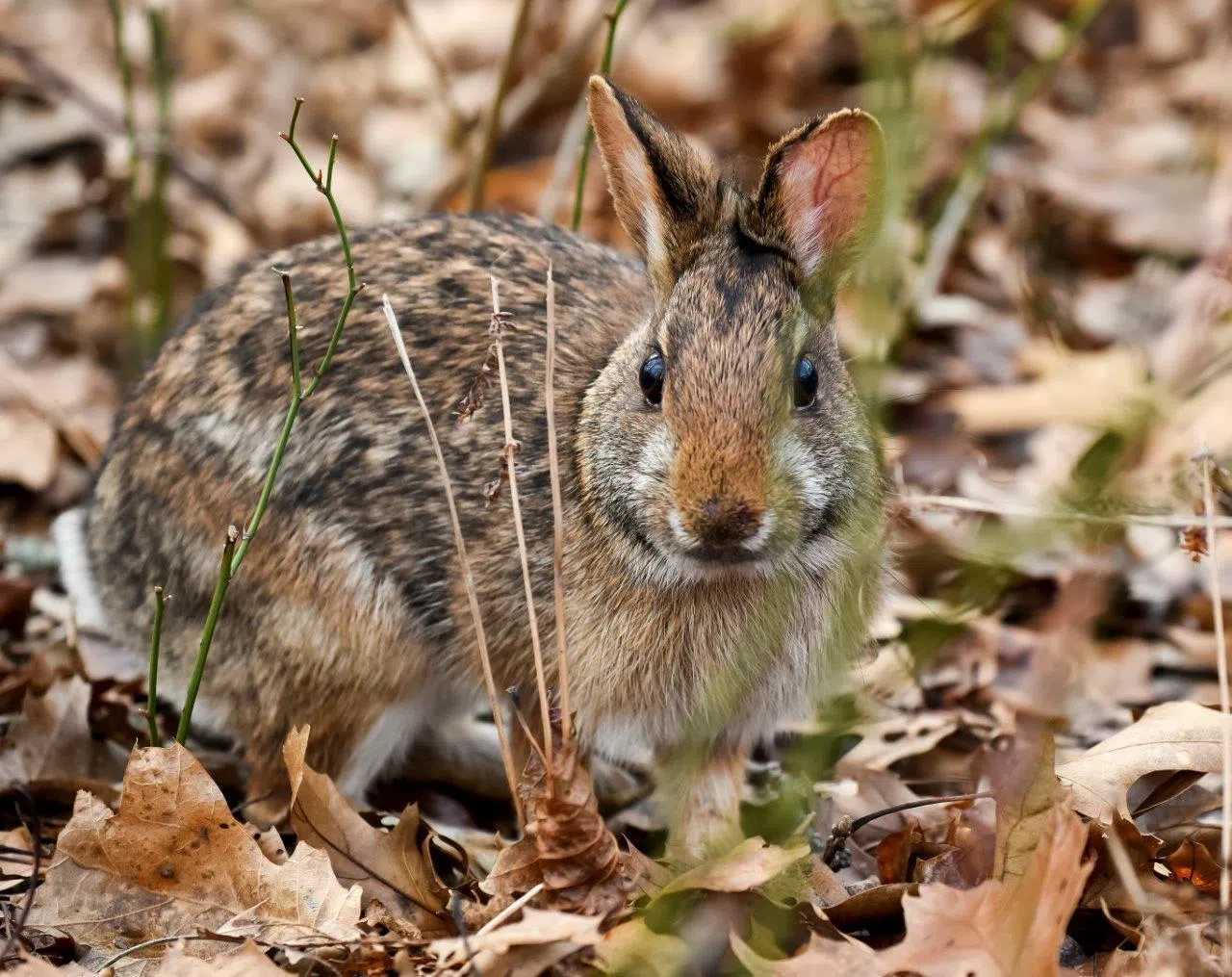
The New England cottontail rabbit is the only indigenous rabbit of New England and eastern New York. The New England cottontail lives in early successional areas like thickets (areas of young trees and shrubs), which it never really leaves. If you see a rabbit in your yard, it is most likely the Eastern cottontail, which was imported to the area in the late 1800s through the early 1900s as a game species. It looks very similar to the New England cottontail but is not as shy and lives in a wider variety of areas.
According to the Connecticut Department of Energy and Environmental Protection (DEEP), the historic range of the New England cottontail has decreased by 85% due to habitat loss. In 2006, the New England cottontail was recommended for listing as an endangered species, but a coalition of state and conservation groups organized to create habitat, breeding programs, and education programs to keep it off the endangered species list. Efforts to restore the population continue to this day. Go to New England cottontail to learn more about these efforts.
New England cottontails are hardly the only species that are under threat. The International Union for Conservation of Nature established the Red List of Endangered Species in 1964. Based on data collected, they classify animals, plants, and fungi as Least Concern, Conservation Dependent, Near Threatened, Vulnerable, Endangered, Critically Endangered, Extinct in the Wild, and Extinct. To see what organisms are in trouble here in Connecticut, go to this DEEP page. Programs and protections are put in place at various levels to try to increase population numbers. The bald eagle may be the most iconic success story having been listed in 1987 and removed from the listing in 2007.
Species face threats from a variety of sources. Habitat destruction and fragmentation, the wildlife trade, poaching, and pollution are some of the most common threats to wildlife but certainly are not all of them. For the bald eagle, it was a combination of habitat destruction, illegal shooting, and DDT contamination that caused the population to decrease, according to the U.S. Fish and Wildlife service.
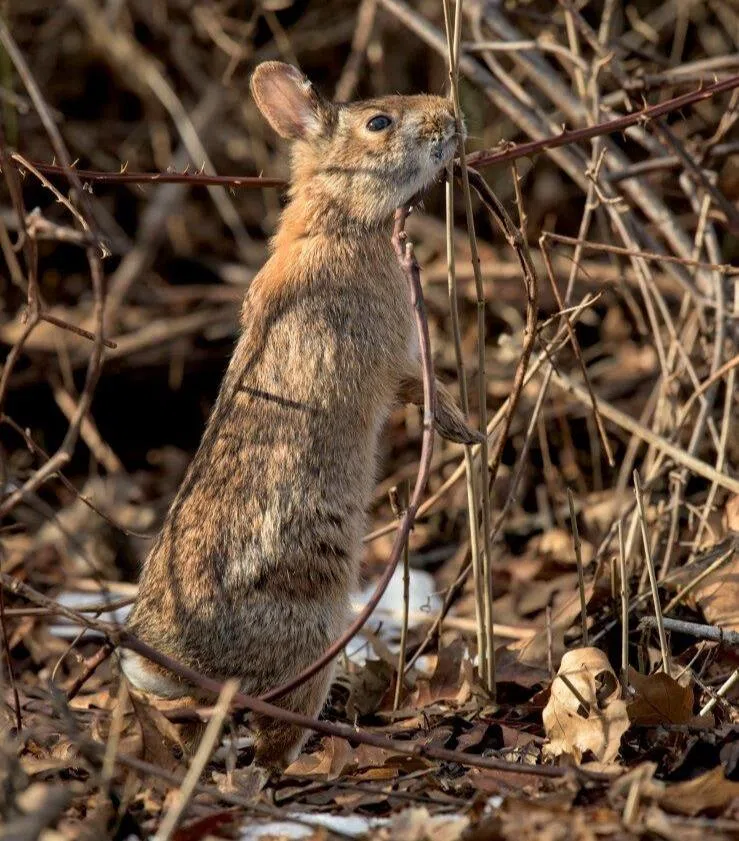
There are ways that each of us can help organisms. Allowing thickets to grow will provide needed habitat for the New England cottontail. Support conservation groups that are working to restore and protect endangered species in Connecticut and across the globe. The Endangered Species Act was signed into law in 1973 by President Richard Nixon. Since then, there have been many times that business has fought the law because the protections impacted their business. It has also been amended several times to expand, clarify or limit the Act. Currently the federal government is trying to significantly weaken the Act. There are legal challenges being brought for every attempted limitation that is being put forth. Contacting your legislators to let them know of your support (using a postcard stating you support the Endangered Species Act and your name, city, and state) is another way you can help.
In ways large and small, each of us can help wild organisms, in all of their beauty, their complexity, and their variety, thrive.

Image Credits: https://www.mass.gov/info-details/new-england-cottontail