
Many a Halloween vignette features a tree with a cat/owl/vulture sitting on a branch. The tree has bare branches, maybe because the leaves have fallen off for the season or maybe because the tree is dead. Let’s focus on dead trees.
Dead trees that are still standing, but have lost most of their branches, are known as snags. Snags play an important role in nature. As they s-l-o-w-e-l-y decompose, the tree will decay by way of various insects, lichens, mushrooms, worms, and bacteria, enriching the soil around it, and providing fertile soil for future trees. Other organisms, including various mammals, reptiles, and amphibians depend on snags for shelter
Connecticut’s Department of Energy and Environmental Protection (DEEP), reports that 35 bird species just in the Northeast depend on snags for food and/or shelter. According to the Audubon Society, snags are wonderful for birds, specifically because they do not have leaves. Nesting spots are created from hollowed out tree cavities, birds of prey use them as lookout spots in hunting, and other birds perch on them to sing a song to attract a mate or declare their territory.
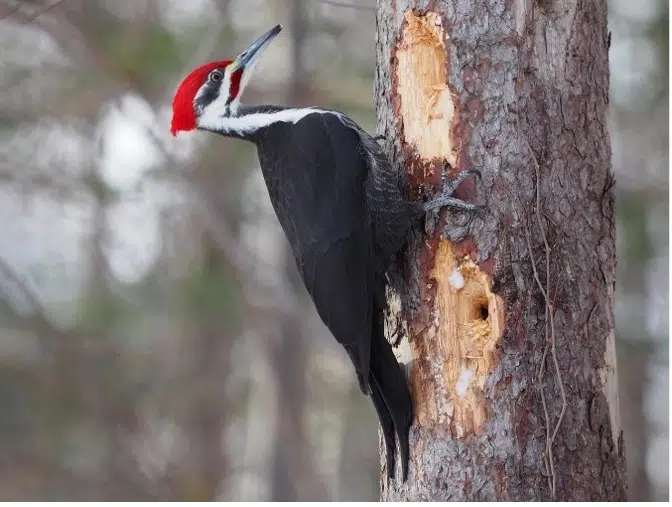
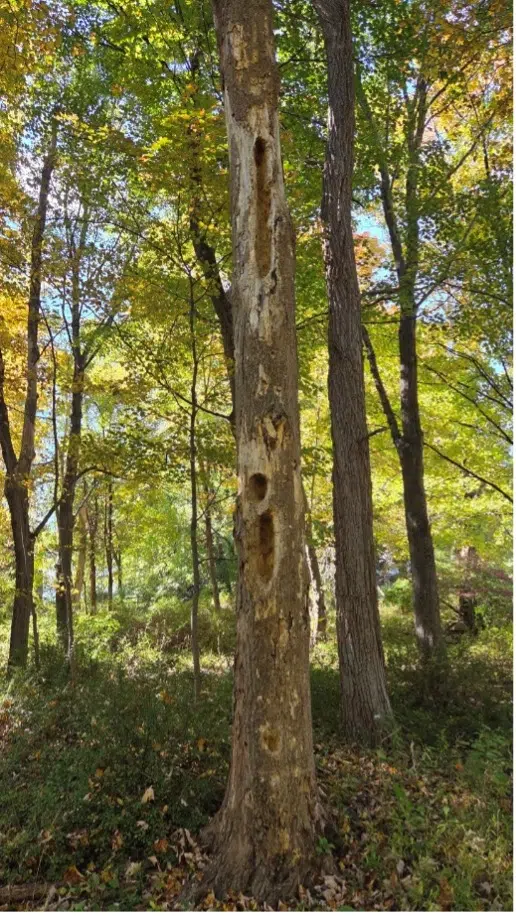
There is a wonderful snag down by The Meetinghouse’s pond. As you can see from the picture, there are big holes carved out. Those were created by piliated woodpeckers (lefthand picture) searching for insects, primarily carpenter ants, once the tree had died. The small holes that ring the snag are leftover and were created by yellow-bellied sapsuckers (righthand picture) who drilled the holes to get sap and insects when the tree was alive. According to Cornell’s All About Birds website, the holes drilled by both types of woodpeckers attract other wildlife from bats to hummingbirds to porcupines.
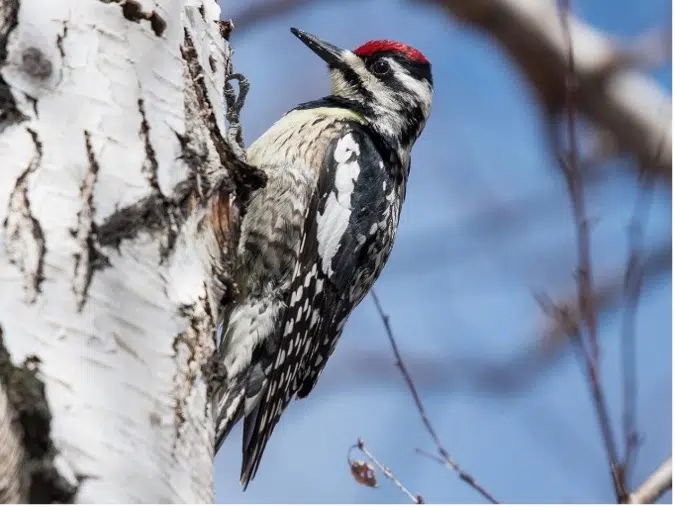
(Bird photos courtesy of Cornell’s All About Birds website)
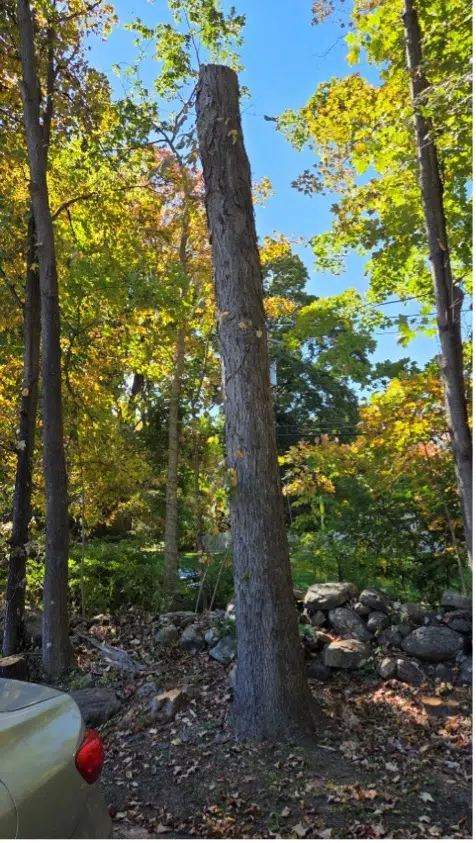
You may have seen The Meetinghouse had some tree work done recently. One hickory tree edging the parking lot was in the last throes of life. Our arborist took down the canopy of the tree and brought the trunk down to about 30 feet. This will allow the tree to provide all the benefits that a snag provides to nature, while eliminating the risk to cars in the lot. More tree work will be done in the near future.
If you have a tree that is dead, consider leaving it for nature, or at least having it cut down so there are no limbs to be wary of. There of course is the caveat, that if the dead tree is near your home or areas where people gather, or if the trunk is weak and could easily uproot in a storm, the proper decision is to probably take the whole tree down.
So, this Halloween season, when you see that classic image of a leafless tree with the owl sitting on a branch, remember the role snags play in nature. And if you have a snag in your own yard, enjoy the wildlife that comes to visit!

Heather Cochrane
Board President, The Meetinghouse